

Rollback Fraud When Buying a Used Car
The mileage on a used car is one of the most significant factors in determining its value, reliability, and remaining lifespan. Unfortunately, this makes it a prime target for a deceptive practice known as odometer rollback fraud. This illegal act involves tampering with a vehicle's odometer to make it display a lower mileage than it has actually traveled. Unscrupulous sellers do this to artificially inflate the car's price and mislead buyers into thinking they are getting a less-worn vehicle. Falling victim to this scam not only means you overpay, but it can also lead to unexpected, costly repairs and serious safety concerns down the road. Understanding the warning signs of odometer tampering is a critical skill for any savvy used car shopper. It empowers you to protect your investment and ensure you drive away in a vehicle that is both safe and fairly priced.
At our dealership, we believe an informed customer is a confident buyer. That is why we are committed to complete transparency in every transaction. We provide comprehensive vehicle history reports and encourage independent inspections to give you total peace of mind. Our entire used inventory undergoes a rigorous evaluation to ensure the history and condition of each vehicle are accurately represented. We want you to be absolutely certain about the quality and value of your purchase before you make a decision.
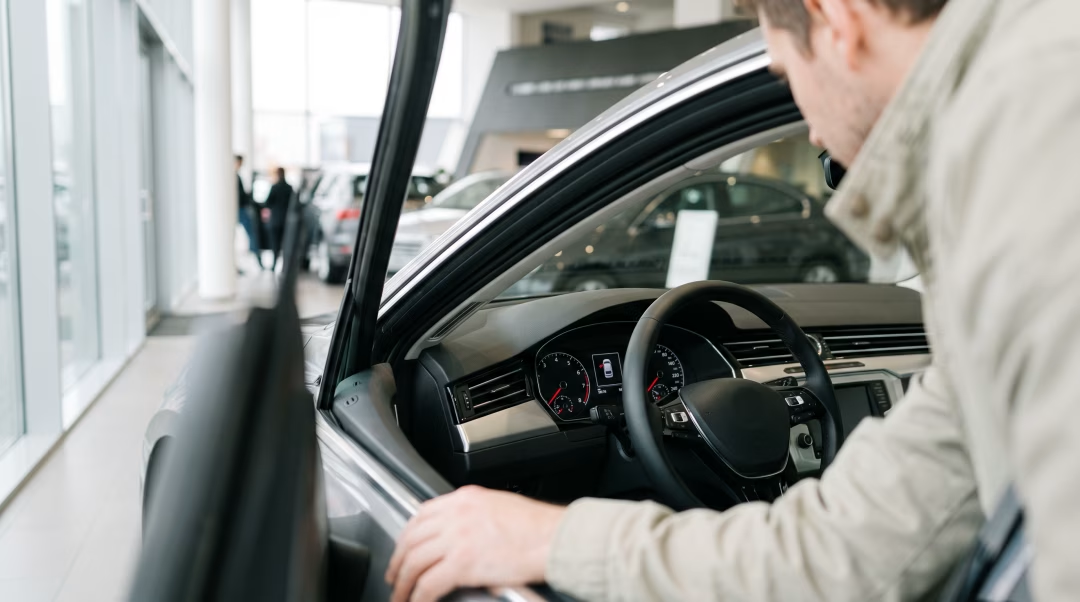
A Deep Dive into Odometer Fraud and How to Protect Yourself
Odometer fraud is a federal crime, yet it continues to be a persistent problem in the used car market, costing American consumers over a billion dollars annually according to the National Highway Traffic Safety Administration (NHTSA). The core of the deception lies in making a high-mileage vehicle appear to be a low-mileage gem. With modern vehicles, this is no longer about physically rolling back a mechanical dial; it involves sophisticated electronic tools that can reprogram a car's digital odometer and its corresponding computer modules. This makes detection more challenging, but not impossible, for a prepared buyer.
The motivation is purely financial. A vehicle with 60,000 miles can be worth thousands of dollars more than the exact same model with 160,000 miles. By illegally altering the mileage, a dishonest seller can pocket that difference. The danger for the buyer extends far beyond the initial overpayment. A car's maintenance schedule is tied directly to its mileage. Critical services like timing belt replacements, transmission fluid changes, and suspension component inspections are all based on distance traveled. If you buy a car showing 70,000 miles that has actually gone 150,000, you are unknowingly operating a vehicle that is long overdue for essential, and often expensive, maintenance. This can lead to sudden component failure, leaving you stranded and facing significant repair bills.
Key Warning Signs of Odometer Tampering
Being vigilant and knowing what to look for are your best defenses against this type of fraud. It requires a holistic approach, looking at the vehicle's physical condition, its paperwork, and its digital footprint. Never rely on the odometer reading alone. Instead, treat it as one piece of a much larger puzzle and look for clues that either support or contradict its claim. Here are the most important areas to inspect:
- Excessive Wear and Tear: The vehicle's condition should be consistent with the mileage shown. A car with 40,000 miles should not have a heavily worn steering wheel, faded or ripped upholstery, a worn-out driver's seat, or worn-down brake and accelerator pedals. These are tell-tale signs that the interior has seen far more use than the odometer suggests.
- Tire Age and Condition: Check the four-digit DOT code on the tires. The last two digits represent the year of manufacture. For example, '3222' means the tire was made in the 32nd week of 2022. If a car with supposedly 30,000 miles has brand new tires, it is worth asking why. Conversely, if it has tires that are several years old, it could be a red flag. Most original equipment tires last around 50,000-60,000 miles.
- Instrument Cluster Inspection: Look closely at the dashboard itself. Are there any scratches or smudges around the odometer display? Does the cluster look like it has been removed or tampered with? On older cars with mechanical odometers, check if the numbers are crooked, misaligned, or have gaps between them. Digital displays should light up correctly without flickering digits.
- Examine the Title and Maintenance Records: The official vehicle title documents the mileage at the time of the last sale. Compare this number with the current reading. Ask the seller for all available service records. Oil change stickers on the door jamb or windshield often include the date and mileage of the last service. If these records are missing or conveniently unavailable, you should be suspicious. A seller who properly maintained their vehicle is usually proud to show the records.
The Power of Documentation and Professional Inspection
While a physical inspection is crucial, it should always be paired with a thorough documentation review and a professional opinion. This two-pronged approach provides the most complete picture of a vehicle's past.
First and foremost, you must obtain a vehicle history report (VHR) from a reputable provider like CARFAX or AutoCheck. This report compiles data from state DMVs, service shops, insurance companies, and police reports. When reviewing a VHR, you are looking for a consistent, logical progression of mileage readings over time. Look at the mileage recorded during state inspections, service appointments, and title transfers. A sudden, unexplained drop in mileage between two recorded dates is the most obvious sign of a rollback. The VHR will also alert you to other potential issues, such as salvage titles, flood damage, or major accidents, which can also influence your purchasing decision.
Even with a clean VHR, the final step before making an offer should be a pre-purchase inspection (PPI) performed by a qualified, independent mechanic that you trust. A technician can often spot signs of wear and tear that an average buyer might miss. They can assess the condition of the engine, transmission, suspension, and brake components, providing an expert opinion on whether the vehicle's state of wear aligns with its odometer reading. Furthermore, with modern vehicles, a mechanic with the right diagnostic tools can sometimes access other computer modules in the car (like the transmission control module or airbag module) that may store their own mileage data, which can then be compared against the dashboard display.
At our dealership, we welcome and encourage PPIs. Our goal is to build long-term relationships with our customers, and that starts with trust and transparency. We stand behind the quality and history of every vehicle we sell. If you ever have questions about a vehicle's past or want to understand its history report in more detail, our team is here to help. Please feel free to contact us or visit one of our locations to learn more about our commitment to quality.
Is odometer tampering illegal in the United States?
Yes, it is a federal crime. The Federal Odometer Act prohibits disconnecting, resetting, or altering a vehicle's odometer with the intent to change the mileage reading. Violators can face significant fines and even prison time. This law was enacted to protect consumers from this deceptive and costly practice.
Can modern digital odometers be rolled back?
Absolutely. While it is more complex than with older mechanical odometers, criminals can use specialized, sophisticated software and hardware to access a vehicle's electronic control unit (ECU) and reprogram the digital mileage display. This is why a physical inspection of wear and tear is still essential, even on newer cars.
What is the most reliable way to check for odometer fraud?
There is no single foolproof method. The most reliable approach is a combination of three key steps: a thorough physical inspection of the vehicle for wear, a detailed review of a comprehensive vehicle history report (like CARFAX), and a professional pre-purchase inspection (PPI) by a trusted independent mechanic.
Does a clean vehicle history report guarantee the mileage is accurate?
Not necessarily. A vehicle history report is an incredibly powerful tool that gathers data from many sources, but it is only as good as the data reported to it. If a rollback was performed between reporting events, it might not show up. However, a VHR is excellent at spotting discrepancies over time, making it a critical part of your due diligence.
What should I do if I suspect a car has had its odometer rolled back?
If you are considering buying the vehicle, the safest and wisest decision is to walk away from the deal immediately. Do not try to negotiate or confront the seller. If you have already purchased the vehicle and later discover evidence of fraud, you should contact your local law enforcement agency and the state's attorney general's office to report the crime.
