

Tires Before Financing a Used Vehicle
When you are preparing to finance a used vehicle, your focus might be on the engine, the mileage, or the interior features. However, the four patches of rubber connecting the car to the road are one of the most critical and revealing components to inspect. Tires are more than just a wear-and-tear item; they are a direct indicator of the vehicle's past maintenance, alignment, and suspension health. A thorough tire inspection can uncover hidden issues that might lead to expensive repairs down the line, affecting the total cost of your investment. Taking a few moments to look closely at the tires can save you hundreds of dollars in immediate replacement costs and give you crucial negotiating power. Before you sign any financing paperwork, understanding what the tires are telling you is a vital step in making a confident and financially sound purchase decision.
Overlooking the tires is a common mistake that can turn a great deal into an unexpected financial burden. A brand new set of tires can easily cost over $800, an expense you may not be prepared for right after making a down payment. By learning what to look for—from tread depth and wear patterns to the age of the rubber itself—you empower yourself. This knowledge ensures the vehicle you choose is not only safe to drive off the lot but also a smart addition to your budget.
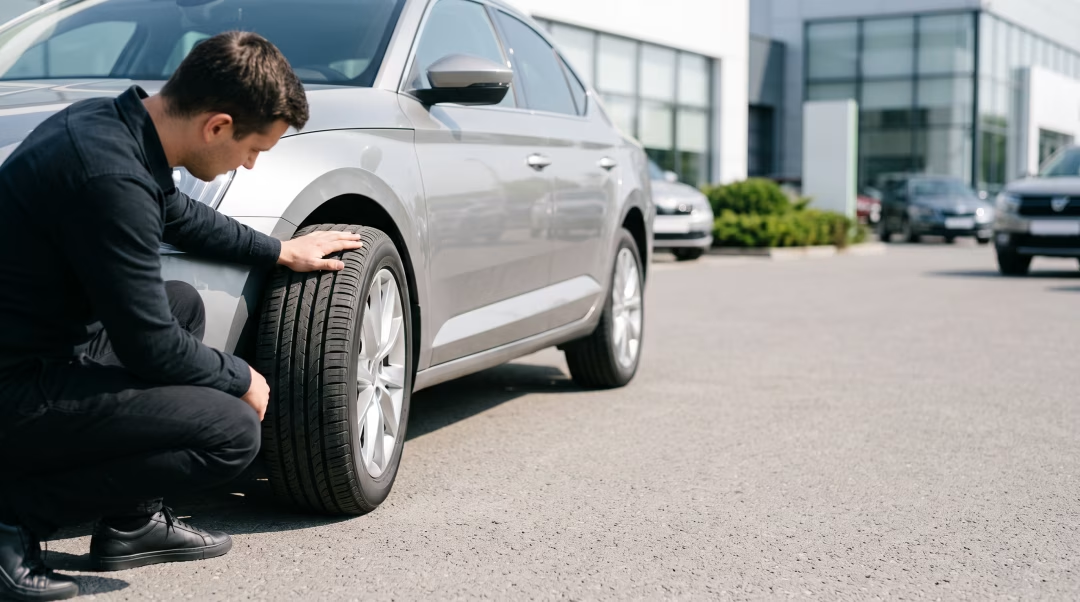
A Comprehensive Guide to Inspecting Used Car Tires
The tires on a used vehicle offer a story about how it was driven and maintained. A careful inspection is your best tool for reading that story before you commit to a purchase. It is a simple process that requires no special tools, just a bit of knowledge and a few minutes of your time. This guide will walk you through every critical aspect of a tire check, helping you identify potential red flags and ensure the vehicle you are considering is as solid as it seems. This is a crucial step before exploring our financing area and committing to a loan.
1. Assessing Tread Depth and Overall Condition
Tread depth is the most basic yet essential tire health indicator. The grooves in a tire are designed to channel water, slush, and dirt away from the contact patch, maintaining grip on the road. When the tread is worn down, the risk of hydroplaning in wet conditions increases dramatically, and stopping distances become longer. Legally, tires are considered worn out when they reach 2/32 of an inch of tread depth, but performance and safety start to decline well before that point.
You can easily check the tread depth using the "penny test":
- Insert a penny into several tread grooves with Abraham Lincoln's head upside down.
- If you can see the top of Lincoln's head, the tread is shallow and worn (below 2/32"), and the tire needs immediate replacement.
- For a more conservative measure, use a quarter. If you can see the top of George Washington's head, the tread is at or below 4/32", meaning the tire should be replaced soon.
While checking depth, also perform a visual and tactile inspection of the entire tire surface. Look for any objects embedded in the tread, such as nails or screws. Run your hand along the surface to feel for any unusual bumps or flat spots that might not be visible.
2. Decoding the Tire Sidewall: Age and Specifications
The sidewall of a tire contains a wealth of information, but the most critical piece for a used car buyer is the date code. Rubber degrades over time due to exposure to oxygen, UV rays, and temperature changes, regardless of tread depth. Old tires become brittle, leading to a much higher risk of a blowout. Most manufacturers recommend replacing tires after six to ten years.
To find the age, look for the "DOT" symbol followed by a series of letters and numbers. The last four digits represent the week and year of manufacture. For example, a code ending in "3521" means the tire was made in the 35th week of 2021. If a tire has deep tread but is eight years old, it is a safety hazard and a necessary expense you will have to cover.
3. Identifying Uneven Wear Patterns
Uneven tread wear is a major red flag because it almost always points to an underlying mechanical issue with the vehicle. Examining the wear pattern across all four tires can give you incredible insight into the car's alignment and suspension health. If you notice these issues, it is important to ask questions. Getting a full picture of a car's history is part of the Buy Here Pay Here philosophy, where transparency is key.
- Center Wear: If the center of the tread is more worn than the edges, it is a classic sign of chronic over-inflation. While easy to correct, it indicates a lack of routine maintenance.
- Edge Wear: When both outer edges of the tire are more worn than the center, it points to consistent under-inflation. This can damage the tire's structure and negatively impact fuel economy.
- One-Sided Wear: Tread wear concentrated on only the inner or outer shoulder is a telltale sign of a wheel alignment problem, specifically with the camber adjustment. This requires an alignment service to fix.
- Cupping or Scalloping: This appears as a pattern of diagonal, scooped-out patches on the tread. It is almost always caused by worn-out shocks or struts or an imbalanced tire. This is one of the most serious wear patterns, as it points to a necessary and potentially costly suspension repair.
Seeing any of these patterns should prompt you to ask more questions and perhaps request that the vehicle be inspected by a trusted mechanic before you proceed. These are issues that go beyond the tires themselves and impact the long-term reliability and cost of ownership of the vehicle.
4. Checking for Sidewall Damage
The sidewall is the structural core of the tire. Any damage here can compromise its integrity and lead to catastrophic failure. Carefully inspect the sidewalls of all four tires for:
- Bulges or Bubbles: These indicate an internal air leak caused by an impact, such as hitting a pothole. A tire with a bulge is unsafe to drive on and must be replaced immediately.
- Cracks or Crazing: Fine cracks in the sidewall, often called weather checking or dry rot, are a sign of old, brittle rubber. Deep cracks are a serious safety concern.
- Cuts or Gouges: Deep cuts that may expose the internal fabric or steel cords are immediate dealbreakers. The tire is structurally compromised.
Remember that these issues cannot be repaired; the only solution is tire replacement. Discovering them before you purchase a vehicle from our used inventory protects you from both a safety risk and an immediate expense.
5. Mismatched Tires and the Spare
Finally, check to see if all four tires on the vehicle are a matching set—the same brand, model, and size. While having different brands on the front and back axles is sometimes acceptable, mismatched tires on the same axle can cause unpredictable handling. More importantly, on an All-Wheel Drive (AWD) vehicle, mismatched tires are a major problem. Even small differences in circumference can strain the drivetrain, leading to extremely expensive repairs to the transfer case or differentials.
Do not forget to inspect the spare tire. Open the trunk or look under the vehicle to ensure the spare is present. Check its condition and air pressure. A missing, flat, or dry-rotted spare tire is useless in an emergency. Also, verify that the jack and lug wrench are with the vehicle. A comprehensive vehicle check should include everything, just as you would want a full understanding before exploring financing frequently asked questions.
How can I tell how old a tire is?
Look for the DOT code on the tire's sidewall. It is a sequence of letters and numbers, and the last four digits indicate the manufacture date. The first two of those four digits represent the week, and the last two represent the year. For example, a code ending in 2520 means the tire was made in the 25th week of 2020.
What is the "penny test" for tire tread?
The penny test is a simple way to check tread depth. Place a penny with Abraham Lincoln's head upside down into a tread groove. If you can see the top of his head, the tread is worn down to 2/32 of an inch or less, and the tire is considered unsafe and needs to be replaced immediately.
Is it a dealbreaker if a used car needs new tires?
Not necessarily, but it should be a significant factor in your decision. A new set of tires is a considerable expense that you will have to cover soon after purchase. You can use this information to negotiate the price of the vehicle or to ensure you have budgeted for the replacement cost on top of your down payment and loan payments.
Why do all four tires need to match?
Matching tires ensure consistent and predictable handling and braking performance. For All-Wheel Drive (AWD) or 4x4 vehicles, it is critical. Even slight differences in tire circumference between matching tires can cause binding and excessive wear on the vehicle's expensive drivetrain components, such as the transfer case and differentials.
Can bad tires indicate other problems with the car?
Yes, absolutely. Uneven tire wear is one of the best indicators of underlying mechanical issues. Wear on one edge can signal an alignment problem, while a cupping or scalloping pattern often points to worn-out shocks or struts. These are repairs that go beyond the cost of new tires, making the tire inspection a crucial diagnostic step.
