

for a Buy Here Pay Here Vehicle?
Securing financing for a quality used vehicle is an exciting step, and at a Buy Here Pay Here dealership, we make that process accessible. As you get ready to drive away in your new car, one of the most important final steps is arranging for the proper auto insurance. Because the dealership is also your lender, the insurance requirements are designed to protect both you and the vehicle throughout your loan term. Unlike buying a car with cash, where you only need to meet state minimums, financing a vehicle involves what is known as full coverage insurance. This typically includes liability, collision, and comprehensive policies. Understanding these requirements beforehand ensures a smooth and efficient process, allowing you to get on the road with the peace of mind that comes from being fully protected. It is a standard practice that safeguards your investment against unforeseen events while you work toward full ownership.
Meeting the insurance requirements for your Buy Here Pay Here vehicle is more than just checking a box on your loan agreement; it is a crucial part of responsible car ownership. This coverage acts as a financial safety net, protecting you from significant out-of-pocket expenses in the event of an accident, theft, or other damage. By maintaining the required policy, you ensure that the vehicle, which serves as the collateral for your loan, remains protected. This partnership helps you stay on track with your payments and build a positive ownership history.
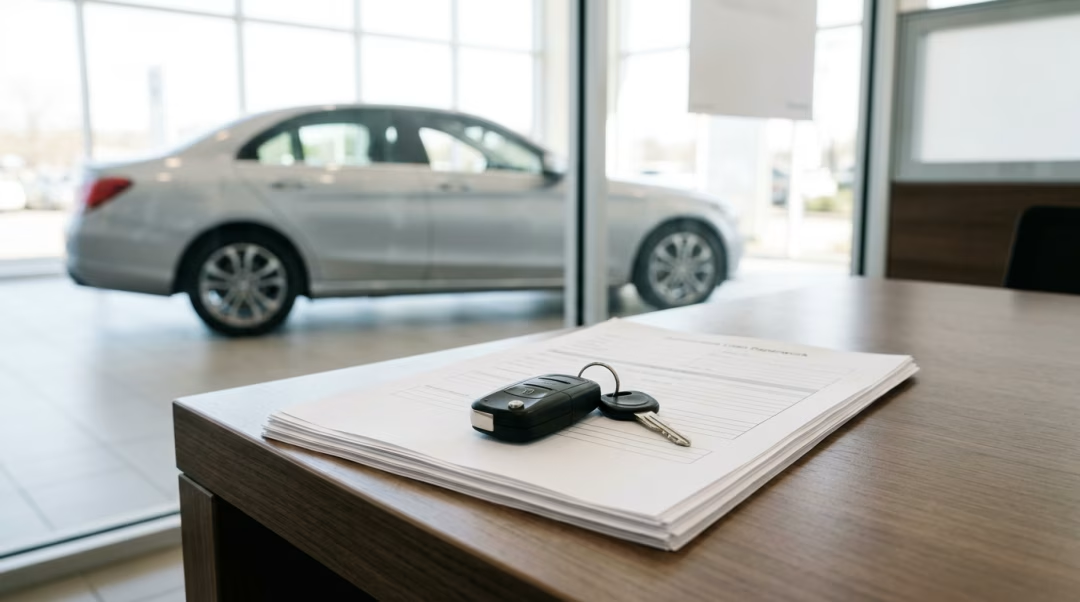
A Deep Dive into BHPH Insurance Requirements
When you finance a vehicle through a Buy Here Pay Here (BHPH) dealership, you are entering into a unique financial arrangement. Unlike a traditional auto loan where a bank or credit union provides the funds, a BHPH dealer provides the in-house financing directly. This means we are not just the seller but also the lienholder on your vehicle's title until the loan is paid in full. Because we have a vested financial interest in the vehicle, we require a level of insurance that protects this asset from damage or loss. This is standard practice for any auto lender, not just BHPH dealerships.
The core requirement is almost always "full coverage" insurance. This is a common industry term, but it is not a single policy. Instead, it is a combination of three distinct types of coverage that work together to provide comprehensive protection.
The Three Pillars of Full Coverage Insurance
To satisfy the financing agreement, your auto insurance policy must include liability, collision, and comprehensive coverage. Let's break down what each of these components does for you and for the protection of the vehicle.
- Liability Coverage: This is the foundation of any auto insurance policy and is required by law in nearly every state. Liability coverage pays for damages you cause to other people and their property in an at-fault accident. It is typically split into two parts: Bodily Injury Liability (for medical expenses of others) and Property Damage Liability (for repairs to their vehicle or property). While legally required to drive, liability coverage alone does nothing to repair or replace your own vehicle. This is why it is insufficient for a financed car.
- Collision Coverage: This is the part of the policy that pays to repair or replace your own vehicle after it is damaged in a collision with another car or an object (like a fence, pole, or guardrail), regardless of who was at fault. If another driver hits you, their liability insurance should cover the damage, but collision coverage protects you even if you are at fault or if the other driver is uninsured. For a lienholder, this coverage is non-negotiable because it ensures the asset can be repaired after an accident.
- Comprehensive Coverage: Sometimes called "other than collision," this coverage protects your vehicle from damage caused by events that are not a crash. This includes a wide range of incidents such as theft, vandalism, fire, hail, flooding, falling objects, or hitting an animal. Just like collision coverage, comprehensive ensures that if the vehicle is stolen or destroyed by a natural event, there are funds available to pay off the remaining loan balance.
Understanding Deductibles and Lienholder Stipulations
When you have collision and comprehensive coverage, you will also have a deductible. A deductible is the amount of money you are required to pay out of pocket for a claim before the insurance company pays the rest. For example, if you have a $500 deductible and your car sustains $3,000 in covered damages, you would pay the first $500, and your insurer would pay the remaining $2,500.
Because the dealership is the lienholder, we will typically set a maximum allowable deductible, often $500 or $1,000. This is to ensure that if a repair is needed, your out-of-pocket cost is manageable, making it more likely that you will get the vehicle fixed promptly. A lower deductible usually means a slightly higher monthly premium, but it provides greater financial protection when you need it.
Furthermore, you must list the dealership as the "lienholder" and "loss payee" on your policy. This is a critical step. It grants us the legal right to be notified if you cancel your policy or miss a payment. It also ensures that if the vehicle is declared a total loss, the insurance check is made out to both you and the dealership, so the outstanding loan balance can be satisfied first.
Proof of Insurance: What You Need Before You Drive
You cannot purchase a vehicle with in-house financing and arrange for insurance later. You must provide proof of active, compliant insurance before you can take delivery of the car and drive it off the lot. A simple insurance card is often not enough. You will need to provide an "insurance binder" or a "declarations page," which is a formal document from your insurer that details:
- The policyholder's name and address.
- The specific vehicle covered (Year, Make, Model, and VIN).
- The types of coverage (Liability, Collision, Comprehensive).
- The deductible amounts for collision and comprehensive.
- The dealership listed as the lienholder and loss payee.
- The effective date and expiration date of the policy.
This document confirms that all financing requirements have been met. Our team at our financing center is happy to help you understand exactly what information your insurance agent will need to provide.
The Consequences of a Lapse in Coverage
Maintaining continuous full coverage insurance is a mandatory condition of your financing agreement. Letting your policy lapse can have severe consequences. If we receive a notification from your insurer that the policy has been cancelled, we are authorized to protect our asset through a measure called "force-placed insurance." This is a temporary policy the lender buys that is extremely expensive and provides very limited protection. It only covers the vehicle itself (protecting the lender's interest) and offers no liability protection for you. The high cost of this insurance will be added to your loan balance, increasing your payments. More importantly, failure to maintain the required insurance is a default on your loan contract, which could ultimately lead to the repossession of the vehicle. It is always more affordable and secure to maintain your own policy.
Frequently Asked Questions About BHPH Insurance
Why can't I just get state minimum liability insurance?
State minimum liability insurance only covers damages you cause to other people or their property; it provides zero coverage for your own vehicle. Because the dealership is the lienholder and has a financial stake in the car until the loan is paid off, we require collision and comprehensive coverage to protect that asset from damage, theft, or total loss. This is a standard requirement for any auto loan, not just Buy Here Pay Here.
What is the highest deductible I can have on my policy?
Most Buy Here Pay Here dealerships will specify a maximum allowable deductible for your collision and comprehensive coverage, typically no higher than $1,000, with many preferring $500. This is to ensure that your out-of-pocket repair cost is manageable in the event of a claim, which makes it more likely that the vehicle (the loan collateral) will be repaired promptly.
Do I have to use a specific insurance company recommended by the dealership?
No, you have the right to choose your own insurance provider. As long as the company is reputable and the policy meets all the requirements outlined in your financing agreement—including full coverage, the correct deductible amounts, and listing us as the lienholder and loss payee—you are free to shop around for the best rates.
What happens if my vehicle is totaled in an accident?
If your vehicle is declared a total loss, your insurance company will determine its Actual Cash Value (ACV). Because we are listed as the lienholder, the insurance payment will be sent to us to pay off your remaining loan balance first. If the insurance payout is more than what you owe, you will receive the difference. If it is less, you may be responsible for the remaining balance, which is where GAP insurance can be beneficial.
Is GAP insurance required for a Buy Here Pay Here loan?
GAP (Guaranteed Asset Protection) insurance is not always mandatory but is highly recommended. It covers the "gap" between what your vehicle is worth and what you still owe on your loan if it is stolen or totaled. Since vehicles depreciate, you can easily owe more than the insurance payout, and GAP coverage protects you from having to pay off a loan for a car you no longer have.
