

Prices Rise After You Buy a Car?
You have found the perfect used vehicle, secured your financing, and are enjoying your newfound freedom on the road. But then, the unexpected happens: gas prices begin to climb. Suddenly, that carefully planned budget feels a lot tighter. This is a common concern for car owners, as fuel is one of the most significant and volatile expenses associated with driving. A sudden spike at the pump can turn a manageable car payment and ownership cost into a source of financial stress. Understanding how to prepare for and react to these fluctuations is essential for maintaining your financial stability. The key is not to panic, but to have a strategy in place. By choosing the right vehicle from the start and adopting smart habits, you can protect your budget from the unpredictability of fuel costs and continue to enjoy your car without worry. Explore our used inventory to find a fuel-efficient option today.
Navigating rising gas prices does not have to derail your financial goals. The solution begins with making an informed purchase and continues with mindful ownership. By focusing on vehicles known for their fuel economy and creating a flexible budget that accounts for variable expenses, you build a strong defense against market volatility. Paired with fuel-saving driving techniques and regular maintenance, you can actively control your spending at the pump. Our team is here to help you understand all aspects of vehicle ownership, including our straightforward Buy Here Pay Here financing process.
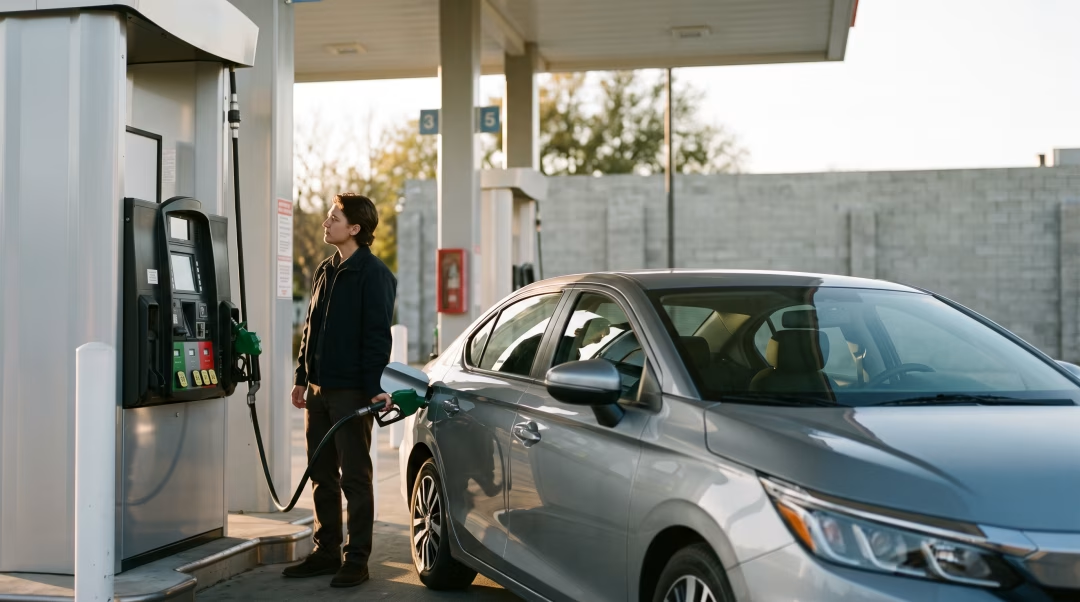
Building a Gas-Proof Budget for Your Next Vehicle
The total cost of owning a vehicle extends far beyond the weekly or bi-weekly payment you make. While your loan payment is a fixed, predictable expense, costs like fuel, insurance, and maintenance can change over time. Of these, gasoline is often the most unpredictable. News headlines about global events, supply chain issues, or seasonal demand can cause prices at the pump to swing dramatically in a matter of weeks. When this happens after you have already committed to a vehicle, it can feel like your budget is suddenly broken. However, a little foresight and strategic planning can create a powerful buffer, ensuring your financial health remains intact no matter what gas prices do.
The first step in creating this buffer is to shift your mindset from "purchase price" to "total cost of ownership." Before you even schedule a test drive, it is wise to consider how a potential vehicle will impact your entire budget. This holistic approach empowers you to make a choice that is not just affordable today, but sustainable for the entire duration of your loan and beyond. It involves research, honest self-assessment of your driving needs, and creating a spending plan that has room to breathe.
Proactive Steps to Take Before You Buy
The most effective way to manage future fuel costs is by making smart decisions before you sign any paperwork. The vehicle you choose has the single biggest impact on how much you will spend at the pump. Here is how to prepare:
- Prioritize Fuel Economy: When browsing our used inventory, pay close attention to the estimated MPG (miles per gallon) for both city and highway driving. A vehicle that gets 30 MPG will cost significantly less to operate over a year than one that gets 20 MPG, especially when gas prices are high. Consider whether a sedan or a compact crossover might meet your needs better than a large SUV or truck if your primary concern is commute costs.
- Calculate Your Commute: Estimate how many miles you drive each week. Consider your daily commute to work, trips to the grocery store, and other regular errands. This number will help you create a realistic fuel budget. Knowing your average mileage allows you to compare two different vehicles and see the real-world cost difference. Our financing area has resources to help you plan your budget.
- Budget with a Buffer: When you are calculating your potential monthly expenses, do not use the current price of gas. Instead, add 20 to 30 percent to the current price per gallon. This creates a "stress test" for your budget. If you can still comfortably afford the vehicle with this imaginary higher gas price, you will be well-prepared for any real-world spikes. You can discuss these budgeting strategies with our team when you get pre-qualified.
- Consider the Vehicle's Powertrain: Traditionally, smaller engines in lighter cars offer the best fuel economy. A four-cylinder sedan is almost always going to be more efficient than a V6 or V8-powered truck. Think about your actual needs. Do you truly need all-wheel drive or a large engine for your daily driving, or is it an occasional want? Making a practical choice here can save you thousands over the life of the loan.
Strategies to Lower Fuel Costs After Your Purchase
Even after you have driven your new-to-you car home, you still have a great deal of control over your fuel consumption. Your habits as a driver and owner can make a measurable difference in how often you have to visit the gas station.
First, focus on your driving style. Aggressive driving, characterized by rapid acceleration and hard braking, is a major fuel waster. It can lower your gas mileage by as much as 30 percent on the highway. Instead, practice smooth acceleration and anticipate stops, allowing your vehicle to coast rather than braking hard at the last second. Maintaining a steady speed on the highway and using cruise control when appropriate also helps conserve fuel. Furthermore, reducing your highway speed from 75 mph to 65 mph can improve fuel efficiency by up to 15 percent.
Next, vehicle maintenance is critical. Simple upkeep can have a surprising impact on your MPG. Keeping your tires properly inflated to the manufacturer's recommended pressure is one of the easiest and most effective ways to improve fuel economy. Underinflated tires create more rolling resistance, forcing your engine to work harder. Regular oil changes with the recommended grade of motor oil and replacing clogged air filters also help your engine run more efficiently, translating directly into fuel savings. Finally, remove unnecessary weight from your vehicle. Carrying around heavy items in your trunk or using a roof rack when it is not needed adds weight and aerodynamic drag, both of which reduce your gas mileage.
Frequently Asked Questions About Fuel Costs and Budgeting
How much should I realistically budget for gasoline each month?
To estimate your monthly fuel budget, first determine your average weekly mileage. Divide that number by your vehicle's combined MPG rating to find out how many gallons you will use per week. Multiply that by four to get a monthly estimate. Finally, multiply the number of gallons by the current price per gallon in your area, and then add a 20% buffer for potential price increases. This gives you a safe and realistic number to work with.
Do smaller, compact cars always get better gas mileage than larger vehicles?
Generally, yes. Smaller, lighter vehicles with smaller engines require less energy to move, resulting in better fuel economy. However, modern automotive technology has improved efficiency across all vehicle types. Some newer mid-size sedans or crossovers with advanced transmissions and engine technology may have better MPG ratings than older, less-advanced compact cars. Always compare the specific MPG ratings of the vehicles you are considering.
Can my personal driving style truly affect my fuel consumption?
Absolutely. Aggressive driving habits like fast acceleration, speeding, and hard braking can significantly decrease your fuel efficiency. The EPA estimates that these habits can lower your gas mileage by 15% to 30% at highway speeds and 10% to 40% in city traffic. Driving smoothly and anticipating traffic flow can lead to substantial savings over time.
What is the most accurate way to estimate my future fuel costs for a specific car?
The U.S. Department of Energy's website, fueleconomy.gov, offers a fantastic tool. You can look up the specific make, model, and year of any vehicle to see its official EPA-estimated MPG. The site also provides an estimated annual fuel cost based on average driving habits and national fuel prices, which you can customize with your local gas prices and annual mileage for a more personalized estimate.
Does a used vehicle's age directly impact its fuel efficiency?
While a vehicle's core MPG rating does not change, its actual performance can degrade over time if not properly maintained. Worn spark plugs, a clogged fuel filter, or old oxygen sensors can all cause an engine to run less efficiently and consume more fuel. That is why choosing a well-maintained used vehicle and committing to regular service is crucial for getting the best possible gas mileage throughout its life.
