

Level Actually Change About Ownership Cost?
When you are browsing our used-inventory, you will notice that vehicles of the same model and year often have different labels like LX, SE, Limited, or Sport. These are trim levels, and they represent more than just a different set of features. While a higher trim level certainly offers more comforts like leather seats or an advanced sound system, it also has a significant and often overlooked impact on the total cost of ownership. The initial price difference is just the beginning. From insurance premiums and fuel consumption to the long term cost of maintenance and repairs, the trim level you choose can alter your vehicle budget for years to come. Understanding these hidden costs is the key to making a truly informed decision that fits both your lifestyle and your financial plan, ensuring your new vehicle is a source of joy, not a financial burden.
Ultimately, the right trim level is a personal balance between desired features and a realistic long term budget. A base model might offer the lowest entry price and cheapest maintenance, while a top tier trim provides advanced technology and comfort at a higher continuing cost. By looking beyond the initial sticker price and considering factors like insurance, fuel, and potential repair expenses, you can confidently select a vehicle that serves you well without surprising your wallet down the road. This foresight is a cornerstone of smart vehicle ownership.
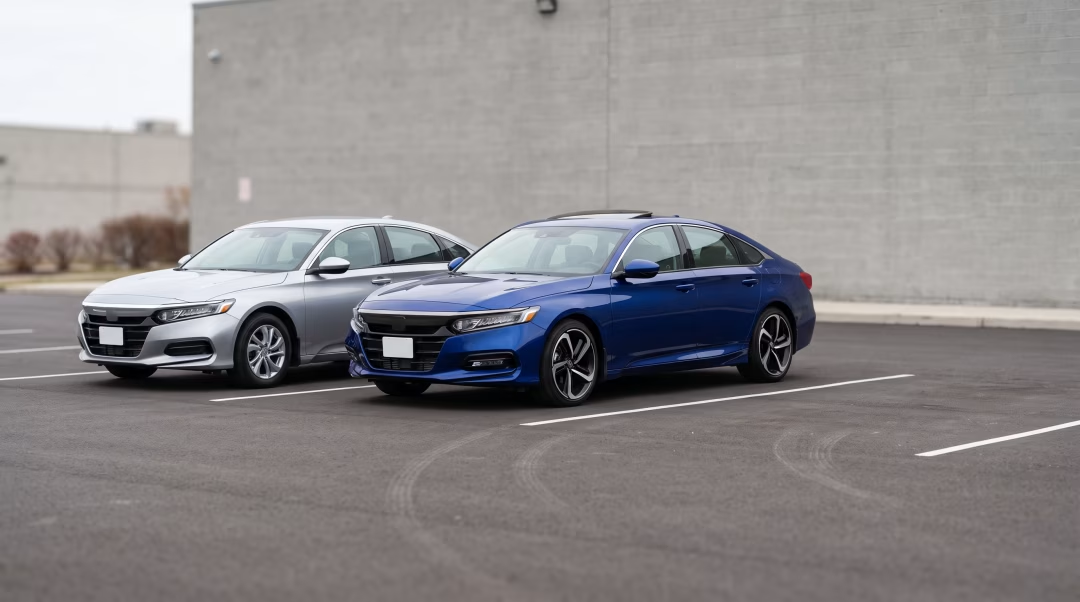
A Deeper Look at Trim Levels and Their Financial Impact
When automakers design a vehicle, they create different versions to appeal to a wide range of buyers and budgets. These versions are known as trim levels or packages. A base model trim provides the essential functions of the vehicle at the most accessible price point. As you move up the trim ladder, manufacturers bundle in more desirable features, including more powerful engines, upgraded interior materials, larger wheels, advanced technology, and sophisticated safety systems. While these upgrades enhance the driving experience, they also introduce variables that directly influence the total cost of owning the vehicle over its entire life.
Thinking about these long term costs is crucial, especially when you are planning your budget. Our team is always here to help you understand your options, and you can even get pre-qualified to see what fits your financial picture before you start shopping. Let us break down exactly where these costs come from.
The Obvious Factor: Initial Purchase Price
The most direct way a trim level affects cost is the price you pay at the dealership. A top of the line "Platinum" or "Touring" edition of an SUV can easily cost thousands more than its "LE" or "S" base model counterpart from the same year. This price gap reflects the value of the added equipment, from a panoramic sunroof and premium audio system to a larger touchscreen and more sophisticated driver assistance features. This higher initial cost will, in turn, affect the total amount you finance and the size of your payment. Understanding how this fits into your budget is the first step. Our our financing area page offers resources to help you explore these details.
Insurance Premiums: A Hidden Cost Increase
One of the most significant and often surprising costs tied to trim level is auto insurance. Insurance companies do not just look at the model of the car; they look at its specific version. A higher trim level almost always results in a higher insurance premium for several key reasons:
- Higher Replacement Value: A fully loaded model costs more to replace if it is stolen or totaled in an accident. The insurer's potential payout is higher, so they charge a higher premium to cover that increased risk.
- Expensive Parts and Technology: That top tier trim might have adaptive LED headlights instead of standard halogen bulbs. A minor front end collision could mean replacing a headlight assembly that costs over a thousand dollars, compared to less than a hundred for a simple bulb. The same applies to bumpers embedded with parking sensors, cameras, and radar for adaptive cruise control. Repairing this technology is complex and costly, driving up insurance rates.
- Theft Risk: High end models with desirable features like large custom wheels or premium sound systems can be a bigger target for theft, which is another risk factor that insurers consider.
Fuel Economy and Performance
Do not assume that two vehicles of the same model get the same gas mileage. Trim levels can introduce mechanical differences that impact fuel efficiency. Higher trims often offer more powerful engine options, such as a V6 instead of a standard four cylinder. While the extra power is appealing, it almost always comes with a penalty in miles per gallon (MPG). Over the course of several years, paying a little more at the pump each week can add up to a substantial amount. Furthermore, premium trims frequently come with larger, wider, and heavier wheels and tires. This added weight and increased friction with the road can also slightly reduce fuel economy compared to the smaller, more efficient tires on a base model.
Long-Term Maintenance and Repair Costs
This is where the cost of ownership can truly diverge between trim levels, especially as a vehicle ages. The features that make a high level trim so attractive when new can become significant sources of expense later on.
Consider the tires. A base model sedan might use a common 16 inch tire that is affordable and readily available. The top trim of that same sedan could be equipped with 19 inch low profile performance tires. When it is time for a new set, the larger performance tires can easily cost twice as much, or even more, than the standard ones. The same logic applies to brake components; performance brake packages found on sportier trims require more expensive pads and rotors.
The complexity of modern technology is another major factor. A base model might have a simple radio and manual climate controls. If the radio fails, it is a relatively inexpensive fix. A high end trim, however, could have a large integrated touchscreen that controls navigation, climate, audio, and vehicle settings. If that screen or its underlying computer module fails outside of warranty, the repair bill could run into the thousands. The more complex systems a car has, from power liftgates to adaptive suspension, the more potential points of failure exist, and those systems are rarely cheap to fix. Before buying, it is wise to check under the hood and consider the complexity of the specific vehicle you are interested in.
Resale Value and Depreciation
The relationship between trim level and resale value is complex. In terms of raw dollars, a more expensive high end trim will lose more money over time than a base model. However, when it comes to percentage of original value, feature rich trims are often more desirable on the used market and may hold their value slightly better. Features like all wheel drive, leather seats, and advanced safety tech can make a vehicle much easier to sell later on. When you are ready for your next vehicle, this can translate to a higher trade in value. You can always get an estimate of what your current vehicle is worth by using our value my trade tool.
Frequently Asked Questions About Vehicle Trim Costs
Does a higher trim level always mean a more reliable car?
Not necessarily. While higher trims use premium materials in the cabin, the core mechanical components like the engine block, transmission, and chassis are often identical to the base model. Reliability is more closely tied to the manufacturer's engineering and the vehicle's maintenance history. In some cases, the added technological complexity of a top tier trim can introduce more potential points of failure, such as sensors or electronic modules, that do not exist on a simpler base model.
How much more does insurance typically cost for a top-tier trim?
The exact amount varies widely based on the vehicle model, your driving record, and your location, but it is not uncommon for a top trim to cost 10 percent to 20 percent more to insure than a base model of the same car. This is due to the higher replacement value and the significantly more expensive cost to repair advanced features like LED headlights, bumper sensors, and integrated infotainment systems after an accident.
Are the advanced safety features on higher trims worth the extra cost?
This is a personal value judgment. Features like blind spot monitoring, automatic emergency braking, and adaptive cruise control can demonstrably enhance safety and reduce driver fatigue. For many drivers, the peace of mind and potential to prevent an accident are well worth the added cost. However, it is important to remember that these systems rely on expensive sensors and cameras that add to the potential repair and insurance costs over the life of the vehicle.
Why are tires so much more expensive on premium trim levels?
Higher trim levels are often equipped with larger diameter wheels, wider tire widths, and lower profile sidewalls for a sportier look and enhanced handling. This combination of factors means the tires are less common, manufactured in smaller quantities, and often use specialized rubber compounds for performance or quietness. As a result, replacing a set of 19 inch performance tires on a top trim can easily cost double what you would pay for the standard 16 inch tires on the base model.
Does trim level affect the cost of a simple oil change?
Generally, for routine maintenance like a standard oil change, the cost is not affected by trim level. However, if the higher trim includes a different, more powerful engine (like a V6 or a turbocharged option), that engine may require more oil or a specific type of synthetic oil, which could slightly increase the cost of the service. It is always best to check the manufacturer's recommendation for the specific engine in the trim you are considering.
