

County Means for Your Vehicle Choice
Living in or around Cumberland County often means spending a significant amount of time on the road. A longer commute is a reality for many, turning the daily drive into a major part of your day and your budget. Choosing the right vehicle is not just a preference; it is a crucial decision that impacts your wallet, your comfort, and your peace of mind. The ideal commuter car balances exceptional fuel economy with proven reliability and a comfortable interior to make those miles melt away. It is about finding a vehicle that works as hard as you do, without breaking the bank. A high-quality used vehicle can be the perfect solution, offering the features you need for a long drive at a price that makes financial sense. Let us help you explore how your commute shapes your ideal vehicle choice and find a car, truck, or SUV that makes every trip a better one.
We understand the unique challenges faced by drivers with long commutes in our community. That is why our inventory is carefully selected to include fuel-efficient and dependable vehicles perfect for navigating the roads of Cumberland County and beyond. Our team is here to guide you to a car that fits your driving habits and your budget. With straightforward our financing area options, we make it easier to get behind the wheel of a vehicle you can count on, day in and day out.
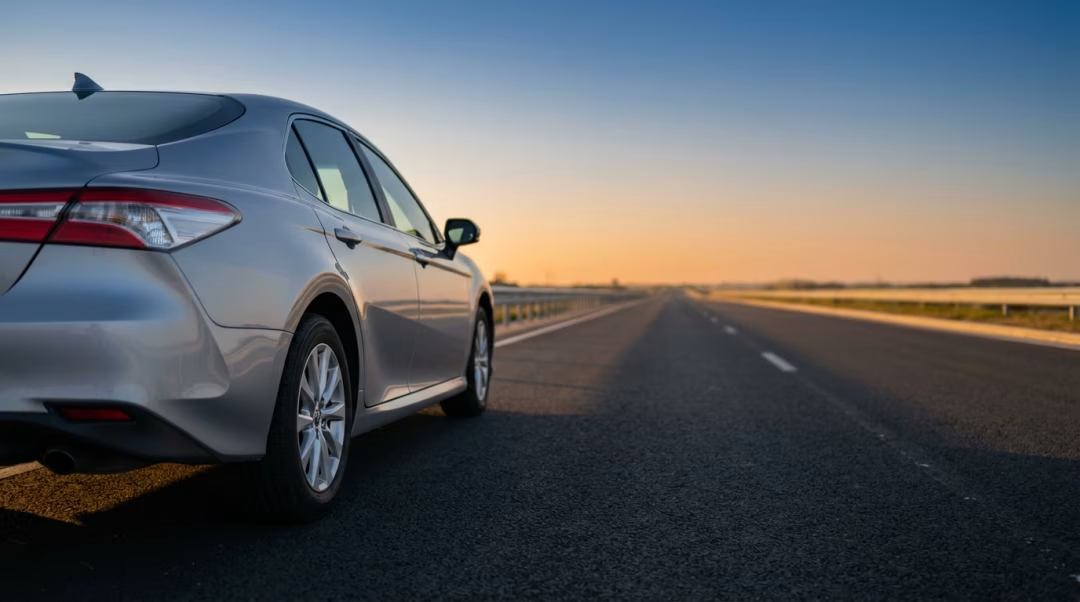
Navigating Your Daily Drive: Key Factors for Cumberland County Commuters
The daily commute is more than just a trip; it is a routine that defines a large part of your life. For residents of Cumberland County who travel long distances for work, school, or family, the vehicle you drive is your most important tool. The wrong car can turn a simple drive into a costly and stressful ordeal, with frequent stops at the gas station and worries about potential breakdowns. The right car, however, can transform your commute into a comfortable, predictable, and economically sound part of your day. This requires looking beyond the sticker price and considering the long-term implications of your choice. Factors like miles per gallon, maintenance history, and interior comfort become top priorities. Your vehicle needs to be a reliable partner on the road, ready to handle thousands of miles a year without complaint.
The Anatomy of an Ideal Commuter Vehicle
When you are putting serious miles on a vehicle, certain characteristics move from the "nice-to-have" category to the "must-have" list. Focusing on these key areas will ensure you select a used car that is perfectly suited for a high-mileage lifestyle.
- Fuel Efficiency is King: This is the most direct way a vehicle impacts your daily budget. A car that gets 35 MPG will cost significantly less to operate over a year than one that gets 20 MPG. Look for vehicles known for their fuel economy, such as compact sedans, hatchbacks, and many modern crossovers. Small lifestyle changes combined with an efficient vehicle can save you hundreds, if not thousands, of dollars annually at the pump.
- Proven Reliability: The last thing any commuter wants is to be stranded on the side of the road. A reliable vehicle is non-negotiable. This means choosing models with a strong track record for dependability and a clear service history. Before you get pre-qualified, it is important to understand that a well-maintained vehicle with higher mileage is often a better choice than a lower-mileage car with a questionable past. We can help you how do you check a used vehicle history report before buying to ensure you are making a solid investment.
- Comfort for the Long Haul: An hour or more in the car each day can take a toll. Supportive seats, a smooth ride, a quality sound system, and features like cruise control can dramatically improve your commuting experience. Do not underestimate the importance of a comfortable and ergonomic cabin; it reduces fatigue and makes the drive far more pleasant.
- Safety as a Priority: More time on the road means more exposure to potential hazards. Modern used vehicles are equipped with an array of safety features, including multiple airbags, anti-lock brakes (ABS), traction control, and electronic stability control. These systems work together to keep you safe and in control, providing valuable peace of mind during your daily travels.
Choosing Your Commuter Type: Sedan vs. Crossover
Two of the most popular vehicle types for commuters are sedans and crossover SUVs. Each offers a unique set of advantages. A common question we hear is whether a sedan versus crossover which makes more sense for a daily commute. Sedans typically offer the best fuel economy due to their lighter weight and more aerodynamic shape. They are often nimble and easy to park, making them ideal for navigating both highways and city streets. On the other hand, crossovers provide a higher driving position for better visibility, more cargo space for versatility, and are frequently available with all-wheel drive for enhanced traction in poor weather. The right choice depends on your personal priorities, whether you value maximum efficiency or need the extra space and capability a crossover provides. We invite you to explore our used inventory to compare different models side-by-side.
Budgeting for Total Cost of Ownership
A smart vehicle purchase involves looking at the complete financial picture. Your monthly payment is just one piece of the puzzle. To create a realistic budget, you must consider the total cost of ownership. This includes estimating your weekly fuel costs, factoring in car insurance premiums, and setting aside funds for routine maintenance like oil changes, tire rotations, and eventual brake replacements. Understanding what is a realistic weekly budget for fuel insurance and a car payment combined is essential for long-term financial health. If you have a current vehicle, you can value my trade to see how its value can offset the cost of your next car and lower your overall expense. Planning for these costs upfront prevents financial surprises and ensures your commuter car remains an asset, not a burden.
Financing Your Next Vehicle with Us
We believe that a long commute should not be a barrier to owning a reliable vehicle. As a dealership that offers in-house financing, we specialize in helping people find solutions that fit their unique financial situations. We understand what is buy here pay here financing means for our customers: a straightforward path to vehicle ownership. Our team works with you to understand your budget and commuting needs, helping you find a vehicle and a payment plan that work for you. Do not let credit challenges stand in your way. We are here to help you get on the road to work with confidence.
What is considered good MPG for a commuter car?
For a vehicle primarily used for a long commute, a good target for fuel economy is anything over 30 miles per gallon (MPG) on the highway. Many modern sedans and even some compact crossovers can easily achieve this, which can lead to significant savings on fuel costs over the course of a year.
Is a higher mileage used car okay for a long commute?
Absolutely. A well-maintained vehicle with a consistent service history can be a very reliable choice for commuting, even with higher mileage. The key is maintenance. A car with 100,000 miles that has been properly cared for is often a better and more dependable option than a car with 50,000 miles that has been neglected.
How important are comfort features for a daily commute?
Comfort features are extremely important for anyone with a long daily drive. Features like supportive seating, cruise control, a quiet cabin, and a good audio system can significantly reduce driver fatigue and stress, making the commute safer and much more enjoyable.
Should I choose a sedan or an SUV for my Cumberland County commute?
The choice depends on your priorities. If your main goal is to maximize fuel efficiency and minimize running costs, a sedan is typically the better option. If you need more cargo space, a higher seating position for visibility, or the option of all-wheel drive for weather, a crossover SUV might be the right fit.
How can I budget for fuel costs with a long commute?
To budget for fuel, first determine the round-trip mileage of your commute. Then, find the highway MPG rating of the vehicle you are considering. You can then calculate how many gallons you will use per week and multiply that by the current local price of gasoline to get a reliable weekly fuel budget.
