

for a Buy Here Pay Here Vehicle?
Deciding to purchase a vehicle is a significant financial step, and with Buy Here Pay Here (BHPH) financing, understanding how much to save upfront is the key to a successful experience. While many focus solely on the down payment, a realistic savings goal includes more than just that initial amount. You should also prepare for taxes, title fees, and the first insurance payment. Having a solid financial cushion before you even start looking at our used inventory ensures you are not just buying a car, but also setting yourself up for comfortable and sustainable ownership. A larger down payment can lower your regular payments and reduce the overall finance charge over the life of your agreement. Planning ahead allows you to drive off the lot with confidence, knowing you have made a smart and manageable financial decision for your future.
Now that you have a foundational understanding of the initial costs, let's explore the specifics of building a comprehensive savings plan. This goes beyond a simple number and involves creating a budget that accounts for both the one-time expenses at signing and the recurring costs of vehicle ownership. By breaking down each component, from state-mandated fees to your personal emergency fund for maintenance, you can calculate a precise savings target. This proactive approach demystifies the process and empowers you to begin your application with a clear financial picture.
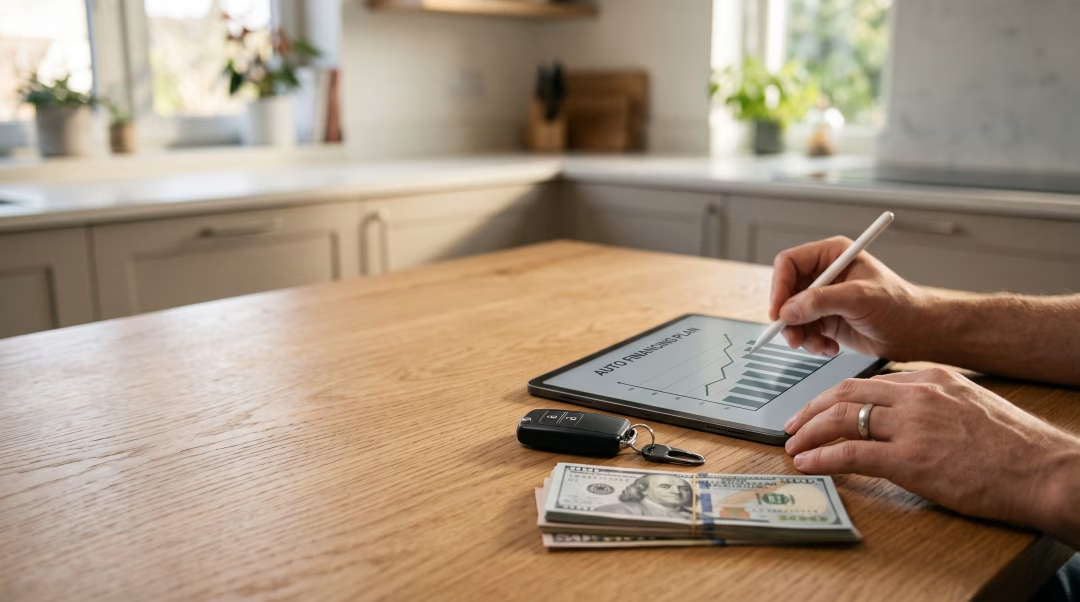
Deconstructing Your BHPH Savings Goal: More Than Just the Down Payment
Embarking on the journey to vehicle ownership through a Buy Here Pay Here dealership offers a fantastic opportunity for those who may not qualify for traditional financing. The key to making this a smooth and stress-free process is preparation. The most common question we hear is, "How much do I need to save?" While the answer varies for every individual and vehicle, a comprehensive savings plan is universally beneficial. It is about looking beyond the advertised down payment and building a financial safety net that covers all initial and ongoing costs associated with your new vehicle.
The largest single amount you will need to save is for your down payment. Unlike a traditional loan where a down payment is often optional, it is a fundamental part of the BHPH model. This initial investment serves several important purposes. First, it demonstrates your commitment and financial stability to the dealership. Second, it immediately creates equity in your vehicle. Most importantly, a substantial down payment directly reduces the total amount you need to finance. This results in more manageable weekly or bi-weekly payments and can decrease the total amount of finance charges you will pay over the term. While some vehicles might be available for a few hundred dollars down, aiming to save 10-20% of the vehicle's price is a solid goal that will put you in a much stronger financial position from day one.
Accounting for the Essential Upfront Costs
Your savings plan must extend beyond the down payment. Several other required costs are due at the time of purchase, and being unprepared for them can delay your ability to drive off the lot. Budgeting for these items ensures a seamless transaction.
- Taxes, Title, and Licensing Fees: These are government-mandated charges and are unavoidable. The sales tax is based on the vehicle's purchase price, while title and registration fees vary by state and locality. We can provide a clear estimate of these costs based on the vehicle you are interested in, allowing you to incorporate an exact figure into your savings goal.
- First Insurance Premium: Lenders, including BHPH dealerships, require you to have full coverage insurance on your financed vehicle to protect the asset. You will need to provide proof of insurance before you can finalize the purchase, which typically means paying your first month's premium upfront. We recommend getting quotes in advance to understand this cost. You can learn more about typical requirements on our page about insurance coverage.
- Dealership Fees: Reputable dealerships are transparent about any additional fees, such as documentation or administrative fees. These cover the costs associated with preparing all the legal paperwork for your purchase. You can always ask for a full breakdown of these costs before you commit, as detailed in our guide to expected fees.
Planning for the Road Ahead: Ongoing Ownership Costs
True financial readiness means looking past the purchase day. Your savings should not be completely depleted by the initial transaction. It is wise to have a buffer to handle the recurring costs of owning a vehicle without straining your monthly budget. Think about what your total transportation costs will look like after you drive away.
First, there is the vehicle payment itself. We offer flexible payment schedules, such as weekly car payments, designed to align with your paydays. You need to ensure this payment fits comfortably within your income. Then, factor in fuel. Estimate your weekly mileage and use current gas prices to project a monthly fuel budget. This can vary significantly between a small sedan and a large SUV, so it is a crucial part of your decision-making.
Finally, every vehicle requires maintenance. Even the most reliable cars need oil changes, new tires, and brake services. Unexpected repairs can also happen. We strongly recommend building a separate vehicle emergency fund. Setting aside just $25-$50 per month into a dedicated savings account can create a buffer of a few hundred dollars within a year, providing immense peace of mind. This fund prevents a minor repair from causing a major financial crisis or impacting your ability to make your payments on time.
Smart Strategies to Reach Your Savings Goal
Saving several hundred or even a few thousand dollars can feel daunting, but with a clear strategy, it is entirely achievable. One of the most popular methods our customers use is dedicating their annual tax refund. Using a tax refund as a down payment is a fantastic way to cover most, if not all, of your upfront costs without touching your regular income.
Another powerful tool is a trade-in. If you have a current vehicle, you can use its value to significantly offset your cash-down requirement. You can get an initial estimate online by using our Value My Trade tool. This can dramatically reduce the amount of cash you need to save. Even an older vehicle that is fully paid off can be worth hundreds of dollars, making a big difference in your financing structure.
Beyond these larger windfalls, consistent saving habits are key. Set up an automatic transfer from your checking to your savings account each payday. Even a small, regular amount adds up quickly over a few months. Carefully review your discretionary spending—cutting back on daily coffees or subscription services temporarily can free up extra cash to accelerate your savings and get you into your next vehicle sooner.
Frequently Asked Questions About Saving for a BHPH Vehicle
Can I use my trade-in as my entire down payment?
In many cases, yes. If your trade-in vehicle has enough equity to cover the required down payment plus the taxes and fees, you may not need to provide any additional cash. We can assess your vehicle's value and let you know exactly how it can be applied to your purchase.
What happens if I cannot afford the full down payment requested?
You should always speak with our financing team. While a certain down payment is required, we can review your unique situation, including your income and budget. Sometimes, choosing a different vehicle from our inventory or exploring other options can help bridge the gap. Our goal is to find a solution that works for you.
Should I save for a bigger down payment or buy a car sooner with less down?
This depends on your immediate need for transportation. While a larger down payment is always better for your long-term finances (as it lowers your payments and total cost), waiting may not be an option if you need a car for work. We can help you compare scenarios to see what makes the most sense for your situation.
How much of my monthly income should a car payment realistically take up?
Financial experts generally recommend that your total transportation costs, including your payment, insurance, and fuel, should not exceed 15-20% of your take-home pay. We work with you to analyze your budget and ensure your payment is affordable and sustainable.
Is it better to pay off small debts first or save for a down payment?
If you have high-interest debts like payday loans or credit cards, reducing them is often a smart move. However, if your primary goal is securing reliable transportation, focusing your efforts on saving for the down payment is crucial. A balanced approach might involve making minimum payments on other debts while aggressively saving for your vehicle.
