

County Affects Vehicle Wear and Tear
The holiday season in Cumberland County brings festive lights, community events, and unfortunately, a significant increase in traffic congestion. While navigating the crowded streets of Fayetteville or Hope Mills can test your patience, it also puts a surprising amount of stress on your vehicle. This is not the same as a long highway drive; the constant stop-and-go conditions accelerate wear on critical components far more than most drivers realize. From your brakes and transmission to your engine's cooling system, the holiday rush takes a silent toll that can lead to costly repairs down the road. Understanding how this specific type of driving affects your car is the first step toward protecting your investment and ensuring you have a reliable ride for years to come. Choosing a durable, well-maintained vehicle is more important than ever when facing the challenges of local holiday traffic. Explore our used inventory to find a car ready for the challenge.
Ultimately, awareness and preparation are your best defense against the mechanical stress of seasonal traffic. A dependable vehicle is not just a convenience but a necessity for navigating Cumberland County safely and efficiently during the busiest months of the year. When you understand the risks, you can make smarter choices about both maintenance and your next vehicle purchase. Ensuring your car is up to the task provides peace of mind, allowing you to focus on what truly matters during the holidays. For more information on financing a reliable vehicle, visit our financing area.
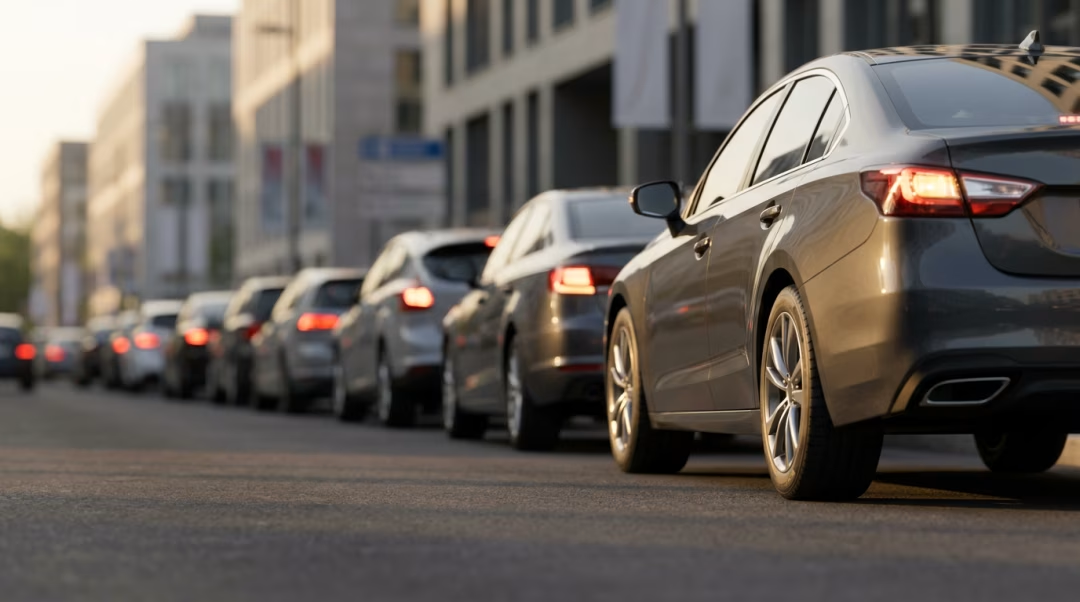
The Detailed Impact of Cumberland County's Holiday Gridlock on Your Car
Every year, from Thanksgiving through New Year's, the roads in and around Fayetteville transform. An influx of shoppers heading to Cross Creek Mall, military personnel from Fort Bragg on leave, and families visiting loved ones creates a perfect storm for traffic congestion. Major arteries like Skibo Road, All American Freeway, and Bragg Boulevard can become parking lots, forcing drivers into a frustrating pattern of creeping forward a few feet at a time. This specific type of "city driving" is fundamentally different from cruising at a steady speed on I-95 and places a unique and demanding strain on nearly every system in your vehicle.
While you might be focused on the time lost, your car is working harder than you think. In stop-and-go traffic, your vehicle's components are subjected to a punishing cycle of acceleration, braking, and idling. This cycle generates excessive heat, causes rapid component wear, and can expose underlying weaknesses in a vehicle's mechanical and electrical systems. For owners of any car, but especially those considering a pre-owned vehicle, understanding these effects is critical for making an informed purchase and implementing a proper maintenance routine. If you are curious about our dealership, you can learn more on our about us page.
Key Vehicle Systems Under Duress in Heavy Traffic
The strain of holiday traffic is not distributed evenly across your car. Certain systems bear the brunt of the abuse. Being aware of these high-risk components can help you anticipate potential problems and take preventative action before a minor issue becomes a major breakdown. If you want to know what to look for, you can learn more about what to check under the hood before buying any used vehicle.
- Braking System: This is the most obvious victim. In gridlock, you are constantly applying the brakes. This frequent use generates a massive amount of heat, which is the enemy of your brake pads, rotors, and fluid. The material on brake pads wears away much faster, and excessively hot rotors can warp, causing a pulsating feeling in the pedal. Furthermore, old brake fluid can absorb moisture, lowering its boiling point and increasing the risk of brake fade—a dangerous loss of stopping power.
- Transmission: An automatic transmission is constantly shifting between first and second gear in slow-moving traffic. Each shift causes friction and generates heat. This heat can degrade the transmission fluid, reducing its ability to lubricate and cool the intricate internal components. Over time, this can lead to slipping gears, delayed engagement, and ultimately, catastrophic transmission failure—one of the most expensive repairs a car owner can face.
- Engine and Cooling System: An engine idling or moving at low speeds does not get the benefit of airflow that it does at highway speeds. This forces the cooling system—the radiator, cooling fans, water pump, and thermostat—to work overtime to dissipate heat and prevent the engine from overheating. A weak battery or a failing cooling fan can quickly lead to an overheated engine, which can cause severe damage like warped cylinder heads or a blown head gasket.
- Fuel System and Efficiency: Your vehicle is least fuel-efficient during acceleration from a complete stop. The constant cycle of stopping and starting absolutely demolishes your miles per gallon (MPG), leading to more frequent and costly trips to the gas station. Additionally, prolonged idling can lead to carbon buildup on spark plugs and inside the engine, further reducing efficiency and performance over time.
- Tires and Suspension: While less dramatic, the impact on your tires and suspension is still significant. The constant braking and accelerating can lead to uneven tire wear if your alignment is not perfect. Navigating congested local roads also often means encountering more potholes and rough pavement, which puts extra stress on your shocks, struts, and other suspension components.
Choosing the Right Vehicle for Fayetteville's Commuting Challenges
If your daily drive involves navigating these congested areas, especially during peak seasons, it pays to choose a vehicle well-suited for the task. Not all cars handle stop-and-go traffic equally well. When browsing our inventory, consider how a vehicle's characteristics align with the demands of Cumberland County driving. For example, comparing a sedan versus crossover which makes more sense for a daily commute is a great place to start.
Generally, vehicles with smaller, more efficient four-cylinder engines are a smarter choice than large V6 or V8 engines for city commuting. They consume less fuel while idling and are often paired with transmissions designed for the rigors of frequent shifting. Furthermore, vehicles known for their robust cooling systems and overall reliability can provide greater peace of mind. Before any purchase, it is crucial to review the vehicle's history report. You can find more information about how do you check a used vehicle history report before buying on our blog. This report can reveal past issues and give you a better sense of the vehicle's maintenance history, helping you avoid a car that has already been worn down by years of harsh city driving.
For many residents in our community, including those in Hope Mills, Sanford, and Lumberton, reliable transportation is key to their livelihood. We specialize in providing financing solutions for all credit situations. We encourage buyers to explore our Buy Here Pay Here options for Hope Mills residents commuting into Fayetteville to see how we can help.
How often should I check my brakes if I am always in holiday traffic?
If you frequently drive in heavy stop-and-go traffic, it is wise to have your brake pad thickness checked with every oil change, or at least every 5,000 to 6,000 miles. A visual inspection can often be done without removing the wheels. This proactive approach allows you to replace pads before they wear down to the rotors, which saves you from a much more expensive repair.
Does idling for long periods really damage my engine?
Yes, excessive idling can be detrimental. It can lead to incomplete fuel combustion, causing carbon deposits to build up on cylinder walls and spark plugs, which reduces efficiency and can shorten engine life. It also means the engine is running for hours without actually traveling, accumulating "phantom" wear and tear that is not reflected on the odometer.
Is a bigger V8 engine worse in stop-and-go traffic than a smaller 4-cylinder?
Generally, yes. A larger engine consumes significantly more fuel while idling and during the constant, short bursts of acceleration common in traffic. It also generates more heat, putting a greater load on the cooling system. A 4-cylinder engine is typically more efficient and better suited for the demands of city driving and heavy congestion.
Can frequent short trips during the holidays drain my car battery?
Absolutely. Starting the engine requires a large amount of electrical power from the battery. If your trips are short and involve a lot of idling in traffic, the alternator may not have enough time to fully recharge the battery. This effect is worsened in cold weather. Combining this with increased use of headlights, wipers, and cabin heaters can slowly drain the battery, leading to a no-start situation.
What is the single most important maintenance item to focus on for city driving?
While all maintenance is important, monitoring your vehicle's fluids is arguably the most critical for city driving. This includes engine oil, transmission fluid, and coolant. These fluids are essential for managing the excessive heat generated in stop-and-go traffic. Regular fluid checks and changes according to your manufacturer's severe-duty schedule are the best way to prevent overheating and premature wear on your engine and transmission.
